
Short Bites Monthly
Your digest for June 2026.

Short Bites Monthly newsletter shares insight into mosquito control efforts at SGV Mosquito. This ensures that our data as a public health agency remains transparent to the public and to people who are interested in our mission of protecting public health from mosquito-borne diseases.

Mosquito Control in June
This month, SGV Mosquito conducted its first treatment of the year in Monterey Park. The Surveillance Team identified mosquito activity patterns in a concentrated area that required a vector control response in order to protect public health. Additionally, rivers were treated for black flies in the foothills and our Operations Team continued to eliminate mosquito sources in public spaces.

Simultaneously, the Communications Team educated residents about mosquitoes and mosquito-borne diseases at 22 different events and presentations across the San Gabriel Valley. The Team also enhanced outreach efforts focusing on local religious congregations where residents are likely to gather and encounter mosquitoes.
In this newsletter, we’re highlighting the identification of the first West Nile virus-positive mosquito in the SGV this year, news coverage of our ongoing mosquito control response in the Eaton Burn Area, and tips on how to landscape mosquitoes out of your yard.
Let’s get the buzz on June.
Public Health Education in Action

This month, we had multiple outreach events and presentations in the cities of Sierra Madre, Duarte, Irwindale, Arcadia, West Covina, San Dimas, Covina, Duarte, Monterey Park, San Gabriel, El Monte, Baldwin Park, and in unincorporated areas like Bassett and Altadena. Additionally, we provide cities with Bite Prevention Kits to use at their events.
We also enhanced our outreach efforts in Monterey Park due to a continuous presence of elevated mosquito activity in a specific area.

Current Outreach Services
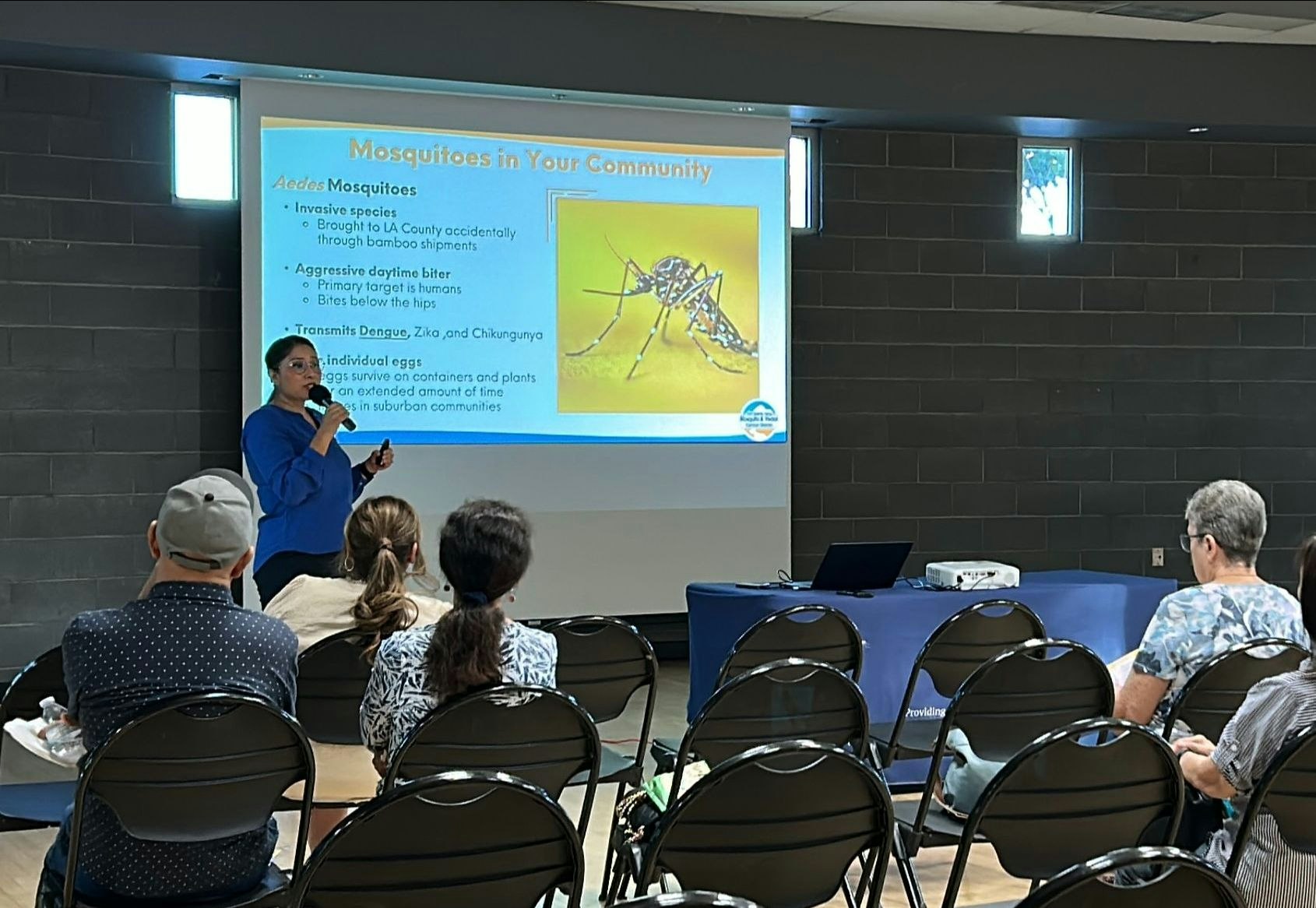
If you’re interested in learning more about general mosquito health and safety tips, book a Mosquito 101 presentation with us.
Perfect for senior centers, city clubs, libraries, and organizations with outdoor workers.
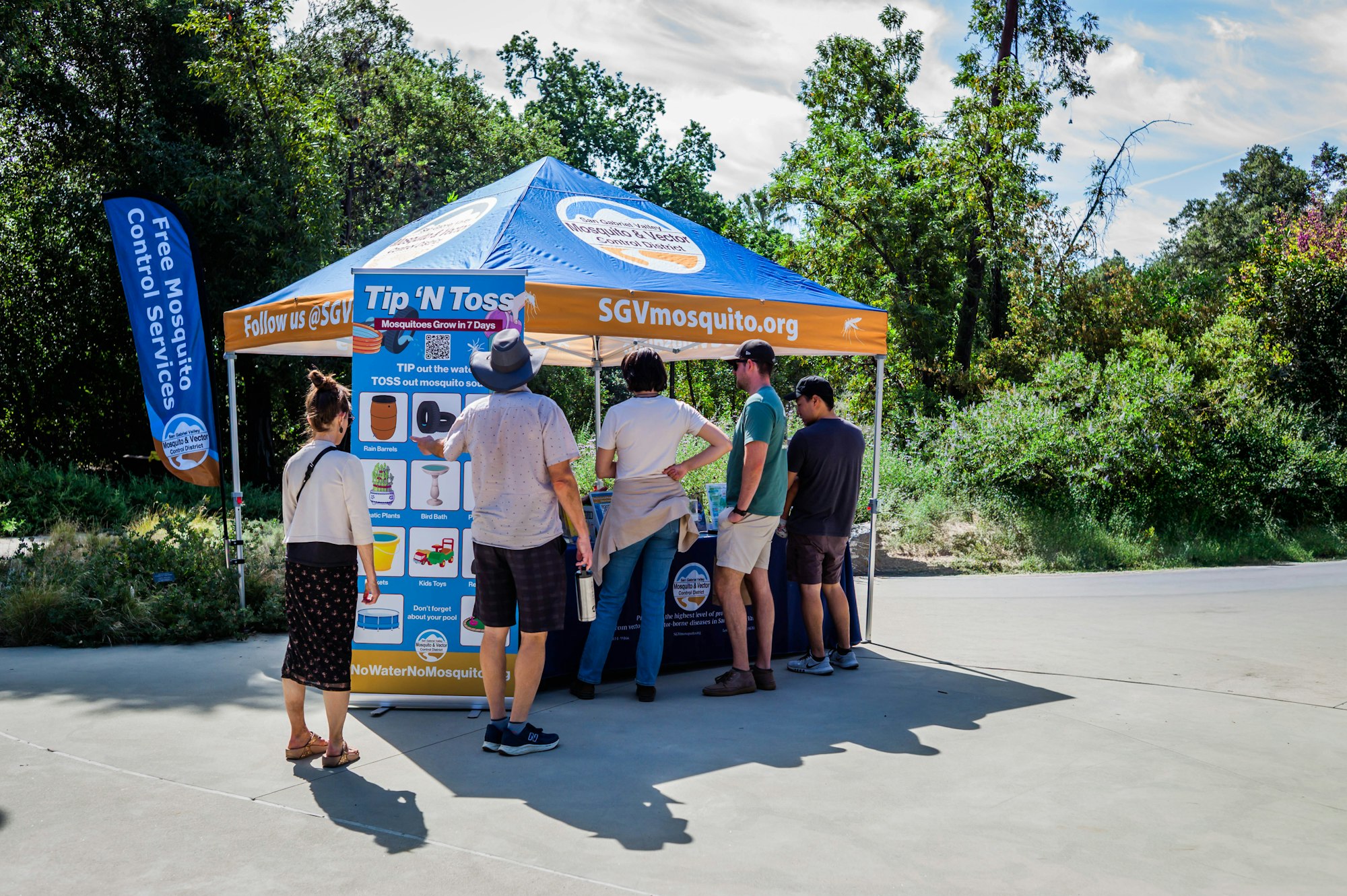
If you’re interested in having an educational and interactive booth at your next city or community event, book a SGV Mosquito booth.
Perfect for large city or community events.
If you’re a resident who wants to do more to control mosquitoes in your neighborhood, book a 15-minute orientation to become a Bite Back Captain for your community.


Mosquito Abundance Report

Mosquito Activity Report

Mosquitoes Species Report

West Nile Virus in So Cal
Every year, San Gabriel Valley residents are at risk for West Nile virus (WNV), which is transmitted by native So Cal Culex mosquitoes. SGV Mosquito regularly tests local mosquitoes for WNV and tracks resident reports of dead birds to pinpoint exactly where the virus is active and when a treatment to protect public health is needed.
This month, we detected the first WNV-positive mosquito in the SGV in the city of Alhambra.

Learn more about West Nile virus
Eaton Area Mosquito Control Response
SGV Mosquito identified 1,475 non-functioning swimming pools damaged by the Eaton Fire. These pools became high-risk breeding grounds; a single pool can produce up to 3 million adult mosquitoes in just one month, posing a significant public health threat through the potential spread of diseases like West Nile virus and Dengue.
Through monitoring, treatment, and aid from its partners, SGV Mosquito has significantly reduced mosquito-borne disease risk.

Learn more on how we support the Eaton Area
The number of high-risk sites has been reduced to 912 active pools currently under supervision. Pools from the list have either been permanently removed or deemed safe, meeting the criteria for being clean, functional, or no longer a threat to the community.
Status of Eaton Area Pools
- Currently there are 912 pools being managed.
- 138 pools are empty and dry.
- 158 pools are maintained with larvicide treatment.

Status of Biological Control
- In 559 of the Eaton Fire affected pools, we have introduced 17,000 mosquito fish (Gambusia affinis).
- These fish provide a natural, long-term solution by eating mosquito larvae before they can reach adulthood.


Mosquito MythBusters
Did you know that there’s a lot of misinformation on Sterile Insect Technique (S.I.T.)?
We’re here to clear that up and share the facts.
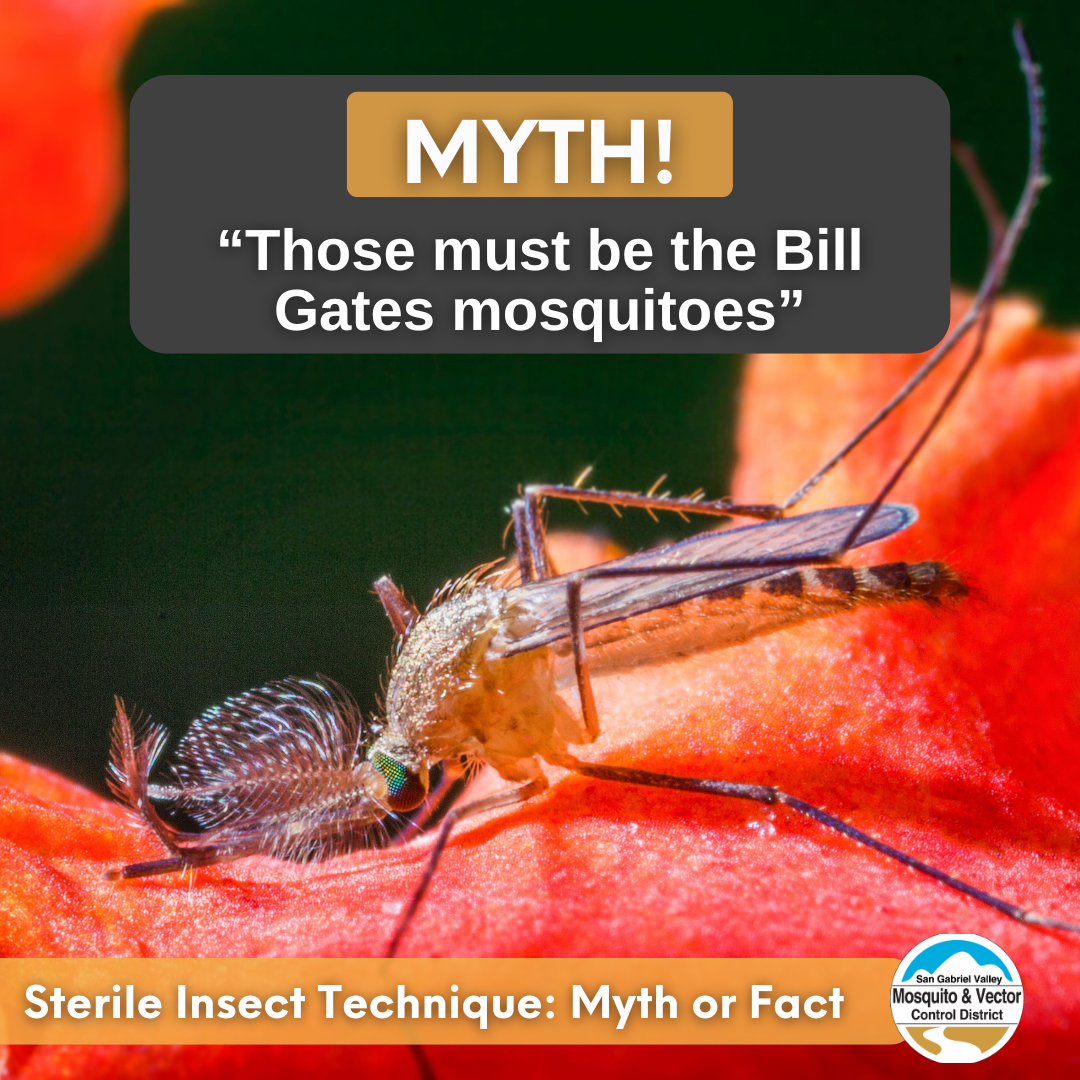
The MYTH: “Those must be the Bill Gates mosquitoes.”
The FACT:
- SGV Mosquito Match has no ties to the Bill & Melinda Gates Foundation.
- Sterile Insect Technique (S.I.T.) has been used for decades to control harmful pests, not just mosquitoes.
- SGV Mosquito Match is using males raised with Wolbachia, a naturally occurring bacteria, to lower mosquito populations.
Current EcoHealth Services
For Elementary School Grades
Vector Inspector Program (V.I.P.) is an interactive community science program that enables students to decrease mosquitoes in the community and protect people from mosquito-borne diseases.

For Middle School Grades
Operation Mosquito G.R.I.D. is an interactive community science program that gets mosquitoes off the grid using scientific tools to trap adult Aedes mosquitoes and analyze their eggs to detect mosquito abundance in their neighborhoods.

Resources to Share
Don’t let mosquito bites ruin your summer plans. We have the ultimate guide to beat the mosquito heat.


From routine control to disaster response, SGV Mosquito takes action to keep communities safe from unlikely threats like mosquito-borne diseases.

For more information, please visit our website.
District Mission: Providing the highest level of protection from vectors & vector-borne diseases in San Gabriel Valley.

🖋 Written & Edited by Ally Gaspar
🖋 Eaton Area Reporting by Derek Garcia