Pet Safety for SGV Pet Owners

Protecting Our Pets from Heartworm
In the San Gabriel Valley, mosquitoes are a significant health threat to our pets. A single bite from an infected mosquito can transmit Heartworm disease, a potentially fatal condition that affects both dogs and cats.

- For Dogs: Dogs are natural hosts for heartworms. These parasites can grow up to 12 inches long, living in the heart and lungs, causing permanent organ damage.
- For Cats: Cats can suffer from "Heartworm Associated Respiratory Disease" (HARD). Often, there are no warning signs before a crisis occurs.
Best Practices for Heartworm Prevention

- Year-Round Preventatives: SGV's climate allows mosquitoes to remain active nearly all year. Consult your veterinarian for monthly oral, topical, or injectable heartworm preventatives. Never use human mosquito repellent on pets as many contain ingredients toxic to animals.
- Limit "Peak Hour" Exposure: Many mosquito species are most active during dawn and dusk. Try to keep cats indoors and limit long walks with dogs during these times to reduce the number of potential bites.
-
Pet-Centric Source Reduction: Change water in pet bowls daily and scrub outdoor water bowls weekly.
- Ensure screens on windows and doors are intact if pets sleep near them.
- Check for mosquito breeding sources (like toys or buckets) in areas where your pets play.
Protecting Ourselves & Our Pets from Typhus
Flea-borne typhus is a disease caused by the bacteria Rickettsia typhi. It is endemic (constantly present) in parts of Los Angeles and Orange counties, though cases pop up occasionally in other areas of California. It does not spread from person to person.
Typhus relies on oriental rat fleas and cat fleas, which can move between animals and humans.
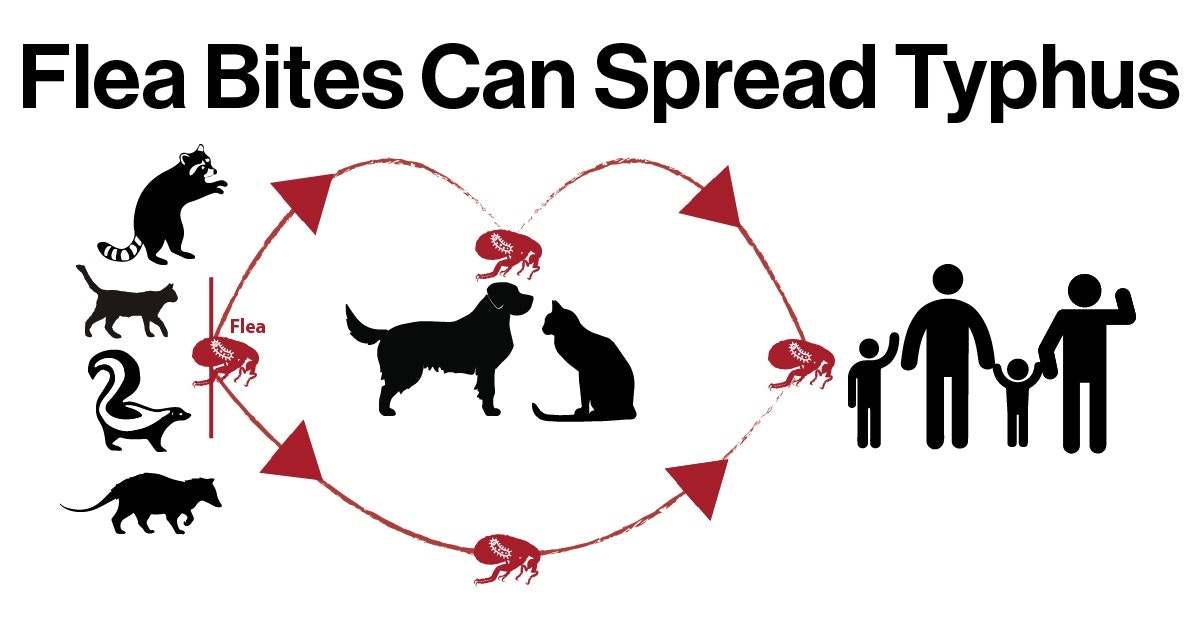
- Typhus Disease Chain: Fleas bite infected wild or feral animals (such as rats, opossums, or stray cats) and contract the bacteria.
- Typhus Transmission: When an infected flea bites a human or pet, it defecates ("flea dirt") near the bite. The bacteria enters the body when that infected waste is rubbed into the bite wound, scratched skin, eyes, or accidentally inhaled.
- Disease Risk Factors: Failing to use flea control on pets or letting them mingle closely with wildlife significantly increases infection risks.
- Common Symptoms: fever, chills, body aches, muscle pain, loss of appetite, nausea, vomiting, stomach pain, and a cough.
- A rash typicall breaks out around day 5 of the illness.
Best Practices for Typhus Prevention
There is no vaccine to prevent flea-borne typhus. The key to preventing flea-borne typhus is to avoid direct contact with fleas.

- KEEP FLEAS AWAY. Keep pets, yards, and homes free from fleas. Oral and topical flea medication is widely available for pets. Yards and homes should also be kept flea-free with flea-control mist, sprays, and powders.
- KEEP YARDS AND HOMES FREE FROM OPOSSUMS AND OTHER WILD ANIMALS. Yards and homes should be kept clean and in good repair to keep animals from entering and living in these areas. Make sure there are no cracks or nesting areas where animals can access and live. Lawns should be trimmed and cleared of debris or other materials. Trash cans and other food sources (accessible pet food) can attract feral cats, opossums and other animals.
Disclaimer: Always consult with a licensed veterinarian before starting any medical treatment or applying pest control products to your pets.

