Fighting Mosquitoes with Mosquitoes: SGV Mosquito Match Begins in Bassett, CA
San Gabriel Valley Mosquito and Vector Control District launches innovative mosquito control program using non-biting male mosquitoes to reduce invasive Aedes aegypti populations.

West Covina, Calif. (July 7th, 2026) – The San Gabriel Valley Mosquito and Vector Control District (SGV Mosquito) will be launching its sterile insect technique (S.I.T.) program, SGV Mosquito Match, in the unincorporated community of Bassett beginning July 7th. SGV Mosquito Match will release non-biting male mosquitoes to reduce populations of invasive Aedes aegypti mosquitoes by targeting the female mosquito’s ability to produce successful offspring. Female mosquitoes of this species can transmit diseases such as dengue, Zika, and chikungunya and are difficult to control using traditional methods alone, posing a potential public health threat to the community.
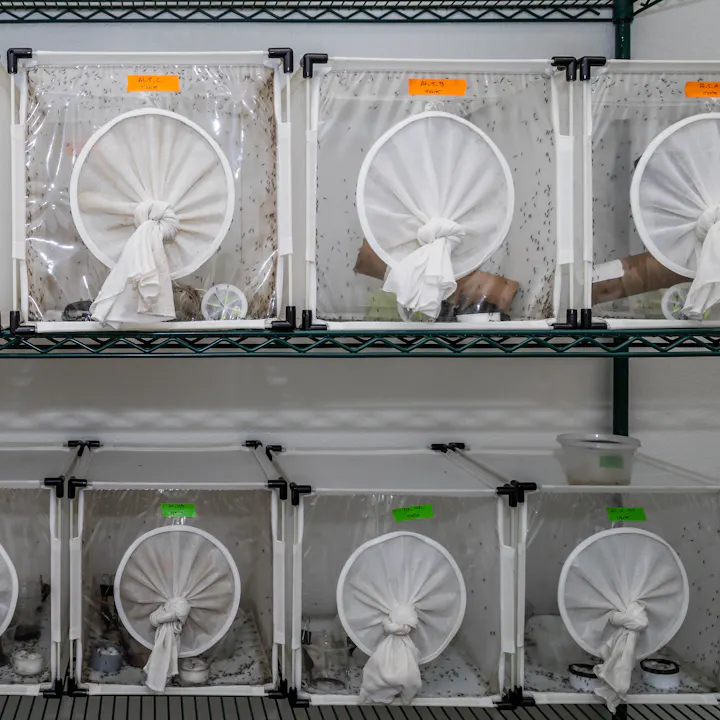
SGV Mosquito Match uses male mosquitoes because they do not bite and do not transmit diseases. Specifically, it will utilize Environmental Protection Agency (EPA) approved WB1 male mosquitoes carrying Wolbachia, a naturally occurring bacterium found in 70% of insects worldwide. These bacteria effectively make the males incompatible with wild female mosquitoes and unable to produce viable offspring. When they MATCH, their eggs won't HATCH - reducing mosquito populations over time.

“As the Aedes aegypti population expands throughout the San Gabriel Valley, the risk for local transmission of dengue, Zika, and chikungunya also increases,” said District Manager Jason Farned. “The district’s S.I.T. initiative, SGV Mosquito Match, provides an innovative approach that utilizes mosquitoes of the same species to work for us, not against us, effectively targeting this population and reducing the threat to public health.”
The program designated the Bassett neighborhood because historical surveillance data has shown high numbers of mosquito abundance, and established populations of Aedes aegypti mosquitoes. Releases will take place in the 25-acre area between the intersections of E. Temple Ave., Millbury Ave., Moccasin St., and Vineland Ave. The program will conduct weekly male mosquito releases for 16 weeks from July through October. Over 30,000 male mosquitoes will be released from cardboard tubes each week.

“While residents may visually see more mosquitoes in the area, Aedes mosquito biting pressure will gradually reduce over time,” said Tristan Hallum, director of Scientific Programs at SGVmosquito. “This program is species-specific and will not affect humans, pets, wildlife, or other insects, like bees or butterflies.”
S.I.T. is a safe, proven method of vector control that has been successfully used globally for the past 70 years to manage other vectors, such as fruit flies and screwworms. In California, multiple vector control districts have deployed S.I.T. mosquitoes to combat the growing threat of the invasive Aedes mosquito.
“SGV Mosquito Match is just one more tool in our toolbox and only targets one species of mosquitoes in our environment,” said Farned. “Residents will still need to tip, toss, and protect to prevent mosquitoes and mosquito-transmitted diseases like West Nile virus.”

Mosquito control is a shared responsibility, and residents must take an active role in reducing the threat of mosquito-borne diseases to themselves and their neighborhoods. Follow the tips below to reduce mosquito populations on your property:
- Eliminate standing water in clogged rain gutters, rain barrels, discarded tires, buckets, watering troughs, or anything that holds water for more than a week
- Ensure that swimming pools, spas, and ponds are properly maintained
- Change the water in pet dishes, birdbaths, and other small containers weekly
- Report neglected swimming pools in your neighborhood to your vector control district
Follow the tips below to prevent mosquito bites:
- Apply mosquito repellent to exposed skin before going outdoors and reapply as recommended on the label
- Wear insect repellent containing EPA-approved active ingredients: DEET®, Picaridin, IR3535, or Oil of Lemon Eucalyptus
- Wear light-colored, long-sleeved shirts and long pants
For more information about the SGV Mosquito Match program, visit SGV Mosquito Match. Residents can contact the San Gabriel Valley Mosquito and Vector Control District at 626-814-9466, online at SGVmosquito.org, or on social media: Facebook, X, and Instagram.
###
MEDIA CONTACT
Anais Medina Diaz, Director of Communications
amedinadiaz@SGVmosquito.org | 626-814-9466